233 pages
Originally published in 1933
Reprinted by Moyer Bell in 2008
Kingston, RI & Lancaster, England
I first discovered the delightfully witty writings of Angela Thirkell when I stumbled upon Wild Strawberries in early 2010. I enjoyed the book so much I checked to see if there were other stories the included the same characters and was pleased to find Wild Strawberries was one of several books in a series! Right then and there I vowed to start at the beginning and read my way through the entire series -- what most know as the Angela Thirkell's Barsetshire Series.
But it was not until mid-spring 2011 that I had the chance to start at the beginning of the series with High Rising. Like Wild Strawberries, High Rising is not a dramatic tale, but instead a comical telling of every-day life in a little English country-side town during the early 1930s.
High Rising centers around Laura Morland, a windowed mother with four sons (three grown and absent from the story), who supports herself and her youngest son, Tony by writing fan-fiction. Included in the story are Laura and Tony's friends, associates, and neighbors who reside in the neighboring towns of Low Rising and High Rising within Barsetshire County. Although nothing much happens in either location the story is driven by the comical escapades of Tony (and at times Laura), a few romances, and plenty of observations on life and human nature by a cast of well-crafted characters -- all of which keep the reader turning page after page.
I found High Rising a delightfully charming and witty story and it didn't take long before I fell in love with the setting and many of the characters. High Rising is a comfort-read that gives one a feeling of nostalgia. It's the type of book I love to pick up and read when I just want to relax and enjoy a good story about people.
My only complaint was with the book edition. It is a reprint, but had numerous type-o's that should have been caught by the publisher (or editor). Because of this I did not bother to purchase a copy of High Rising, but instead borrowed one from my library. I would love to own a copy of this book, it was that good, but I am holding out for either an older (original) edition or correct reprint.
I definitely look forward to reading more in the series and highly recommend High Rising to those looking for a light, entertaining read with plenty of character charm.
---------------
Related Links:
Showing posts with label Angela Thirkell. Show all posts
Monday, September 5, 2011
Sunday, January 30, 2011
Author Birthday: Angela Thirkell
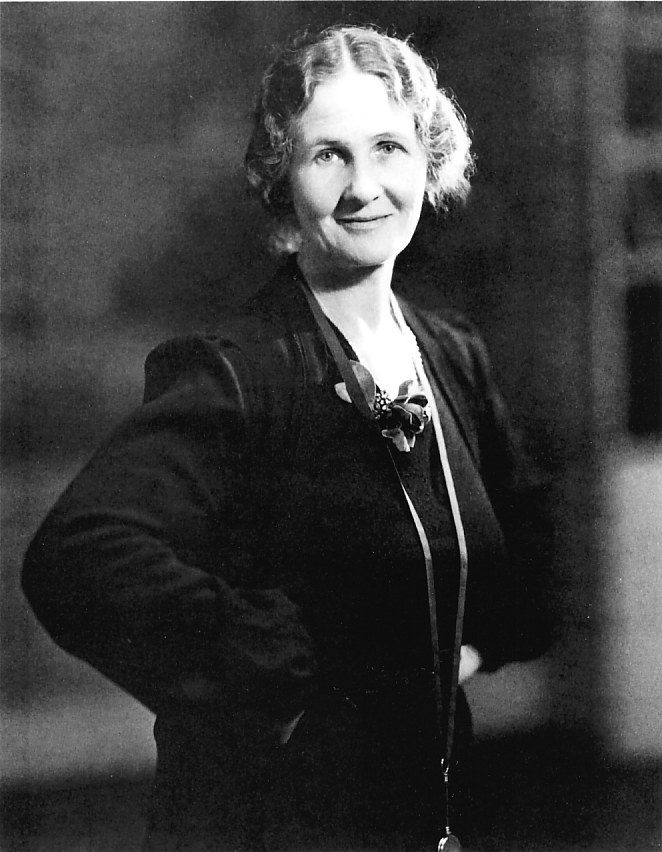
Happy birthday to Angela Thirkell!Born January 30, 1890 in London, England, Angela was the author of over 30 books during her lifetime (1890-1961). She began writing simply because she was in need of money. What began as articles and short stories in London papers led to stories for children and eventually to novels for adults.
What is interesting to note is that most of Angela's novels are set in the fictional county of Barsetshire, which was actually created by 19th century English author Anthony Trollope in his Chronicles of Barsetshire series. Also interesting for avid readers of English literature, is the fact that it was also quite common for the characters within Angela's books to quote from the works of Charles Dickens, Jane Austen, Anthony Trollope, Elizabeth Gaskell, and the like.
From the first time I picked up my first Angela Thirkell novel I was charmed. They are delightful reads. To learn more about my thoughts on the two books I read in 2010 check out my reviews here: Wild Strawberries and The Headmistress. I am hoping in the next couple of months to begin reading High Rising, the first in Angela's Barsetshire series, so check back for my review mid-spring.
To learn more about Angela Thirkell be sure to check out the European Angela Thirkell Society and the American Angela Thirkell Society.
-------------
Related Links:
UK: Angela Thirkell Society
Americas: Angela Thirkell Society
Listing of Angela Thirkell's Books
Wikipedia: Angela Thirkell
Friday, June 25, 2010
The Way We Live Now by Anthony Trollope
802 pagesPublished in serial form 1874-1875
Reprinted Barnes & Noble Classics, 2005
New York, NY
I can't help but find it a little ironic that a few weeks after I first discovered Angela Thirkell and her Barsetshire novels my book club settled upon reading an Anthony Trollope novel. For those who don't know/remember, Anthony Trollope wrote a series of six books set in the fictional county of Barsetshire, which some 80 years later Angela Thirkell used as inspiration for 29 of her own novels set in that same fictional county. (While Trollope's novels were about the people of Barsetshire in the mid 19th century, Thirkell's were her own creation of the people of Barsetshire in the early and mid 20th century.)
The book selected by my book club was not one of Trollope's Chronicles of Barsetshire, but one of Trollope's longer stories, The Way We Live Now, which although not popular upon first publication has in recent years come to be considered Trollope's best work.
The Plot:
"Ruthless greed, relentless self-promotion, corporate swindles and scandals on a grand scale -- indeed it sounds like 'the way we live now.' Though Anthony Trollope's title actually refers to 1870s England, his scathing satire of a money-mad culture cuts close to the contemporary bone. At its center stands Augustus Melmotte, a crooked financier whose enormous schemes ensnare an array of avaricious aristocrats, politicians and 'important people.' Among them are Lady Carbury, who earns the family bread by churning out fatuous potboilers, and her spendthrift, ne''er-do-well son, Felix, who sets his sights on Melmotte's dangerously beautiful daughter, Marie. meanwhile Felix's sister, Hetta, falls for Melmotte's partner, Paul, who's encumbered wiht an American fiancee, herself a widow who may have shot her husband. As the frauds expand and the romantic entanglements grow ever more complex, Trollope revels in the antics of his characters while pillorying the corruption of their morally bankrupt society." (Summary courtesy of the publisher)
My Thoughts:
I thoroughly enjoyed this read. The story plot is thick (so much happens within the story over the course of six months) and the characters richly colorful and quirky.
Some readers might liken Trollope to Dickens, but I think in some ways Trollope is actually better than Dickens. The Way We Live Now is a long book, almost as long as Dickens' Bleak House or Little Dorrit, yet not once did I feel the story lagged or that Trollope was rambling as I admit I have felt from time to time with Dickens. Another aspect that I liked about Trollope's writing is that his characters seemed a little less stereotypical. On the downside I can't say that I loved any of the characters in The Way We Live Now. I liked some of the characters and I completely despised some of the others within The Way We Live Now, but none tugged at my heartstrings as in books like Bleak House.
One similarity between Dickens and Trollope is the ending. Both Dickens and Trollope ended their novels with a "happy ending" -- although in the case of The Way We Live Now that doesn't mean every character lives happily-ever-after or has all their problems solved, but it does mean that the reader finishes the book satisfied.
The Way We Live Now is a satire, which means Trollope was writing tongue-in-cheek as he criticized and commented on various aspects of life in England during the latter decades of the 19th century. His writing is filled with interesting and thought provoking snapshots and at the same time is witty and entertaining. Although a long read (with 100 chapters) The Way We Live Now is not a difficult read. I particularly enjoyed the vivid imagery that Trollope's words painted and jotted down many passages in my Book of Books.
Some might be discouraged by the length of The Way We Live Now, as I mentioned it runs to 100 chapters and depending on the publication can average around 800 pages. It took me 25 days to finish, but it was definitely a worthwhile read and one I highly recommend to any reader. I bounced back and forth between reading the actual book and listening to the complete book read aloud with the free LibroVox iPhone application. Having finished and thoroughly enjoyed The Way We Live Now I am definitely planning to explore more of Trollope's works in the future. As for The Way We Live Now, this is one book I'd advise you to buy rather than borrow.
On
a related note, PBS Masterpiece Theater produced a mini-series adaptation of The Way We Live Now in 2001 starring David Suchet (Hercule Poirot) and Matthew Macfadyen (Pride and Prejudice). I watched this series in 2007 at a time when, sadly, I'd never heard of Anthony Trollope. The movie is fairly true to the book. Some aspects of the story did not transfer to the screen, others did not transfer very well, which means you don't get the full depth of this story by watching the movie alone. But I do believe watching the adaptation does help a reader gain a better understanding of the story as a whole and also helps keep who's who amongst the characters clear within the reader's mind while they read.I will add that the movie ending and the book ending are different, but only slightly so and both still end happily. The only objection I had to the movie was the addition of some bedroom-type scenes, though not obscene were enough to leave the viewer without doubt as to the intimacy of the character's relationships. Upon further reflection I believe this interpretation is typical of society's views within the 21st century, but not what Trollope intended in his book. It just doesn't work with the social views of the 19th century. Yes, affairs occurred, but not for characters of these types. Still I enjoyed the miniseries and recommend it to anyone who has read the book or requires some assistance in understanding the story before setting out to read the novel.
-----------------
Related Links:
* Anthony Trollope Society
* Anthony Trollope.Com
* Anthony Trollope USA
* PBS: Masterpiece Classics: The Way We Live Now
* E-book: The Way We Live Now (Project Gutenberg)
* Audio-Book: LibroVox: The Way We Live Now
Labels:
1001 Books You Must Read List,
Angela Thirkell,
Anthony Trollope,
Book Review,
Classics,
Drama,
English Literature,
Historical,
Late 19th Century,
Movies,
Political,
Romance,
Satire,
Serial Books
Thursday, June 17, 2010
The Headmistress by Angela Thirkell
346 pagesPublished in 1944,
Reprinted by Moyer Bell August 1995
I chose to read The Headmistress as my next read by Angela Thirkell simply for the fact it is widely considered by readers as Thirkell's best novel. At the time I assumed it didn't matter the order in which one read Thirkell's Barsetshire novels. I thought after reading Wild Strawberries (4th in the Barsetshire series) that even though each Barsetshire book is connected the story threads between each novel isn't connected enough to matter the order in which they are read... And to a degree that is true; most of Thirkell's novels are hardly "sequels" and yet they are woven together with references to people, places, and events that make reading them in order much more enjoyable. I realize now that it was a bit of a mistake for me to read The Headmistress ahead of the other 11 books preceding it in the series. As I read I often found myself on the outside of an inside joke or memory, which took away some of the richeness of the story. And yet, this did not stop me from enjoying this charming read.
The Plot:
"The Beltons of Harefield Park, in financial straits endemic to the times, have leased the ancestral home to the Hosier’s Girls School whose headmistress, Miss Sparling, a cut above the "nouveau riche" students, is welcomed into village society. Sam Adams, a wealthy, self-made industrialist, and his lumpish daughter Heather are introduced and we glimpse 'the thin entering wedge' into the solid front of the old gentry. Mixo-Lydians backed by Dr. Perry's wife, and Slavo-Lydians, clients of the mildly obnoxious Mrs. Hunter, barely avoid violent confrontation; it is Mr. Adams who gives short shrift to their belligerent solicitations. And we meet again the bemused Mrs. Updike whose self-battering, as she careens through life, gives new meaning to 'accident-prone.' Miss Sparling reaches an "understanding"... {spoiler removed}...and strong willed Elsa Belton is corralled by [a man] {again spoiler removed} who declines to be jilted. The poignant relationship between Mrs. Belton and her charming but prickly younger son, Charles, on embarkation leave, cuts through the lightheartedness and brings the war home." (Summary Courtsey of The Angela Thirkell Society)
My thoughts:
I found The Headmistress not nearly as exciting and entertaining as Wild Strawberries. The characters weren't quite as lovable and the conversations not quite as humorous. But perhaps this is because I was missing so much by skipping the earlier books? I'm not sure. Even so, I did enjoy the day-to-day happenings within the story. It was interesting to read of life in a small English village during World War II. How different are the lives of the Beltons and Miss Sparling when compared side by side with my own. Not only does an ocean and 70 years separate us, but the more obvious fact of real life vs. fiction. Still, I really enjoyed Angela Thirkell's story telling and I look forward to reading more about the Beltons, who appear in at least six more novels within the Barsetshire series. But first, I plan to go back and start the series over properly with her first novel, High Rising.
For those interested in sampling Angela Thirkell's books without finding themselves knee deep into the series I'd suggest starting with Wild Strawberries or perhaps, as I am, the first novel, High Rising. Then once you are a little more familiar with the characters and their history pick up a copy of The Headmistress.
Angela Thirkell is a wonderfully entertaining writer and I am so glad to have the opportunity and access to her novels.
-----------------------
Related Reviews:
Wild Strawberries (1934)
Saturday, May 22, 2010
Wild Strawberries by Angela Thirkell
227 pagesPublished 1934 by Hamish Hamilton
Reprinted 2008 by Hoyer Bell
I first learned of English/Australian author Angela Thirkell thanks to fellow blogger and reader, Marie. Since I was already a fan of D. E. Stevenson, Marie suggested I check out Thirkell's novels. I am so glad she did!
Since I knew nothing of Angela Thirkell, I began by searching the Internet to find out who she was and what she wrote. I quickly discovered two things about Thirkell. First, she was a very prolific writer (penning over thirty novels in nearly as many years; beginning in 1931 and publishing on average one novel a year until her death in the early 1960s). And second, that unlike D. E. Stevenson nearly all of Angela Thirkell's novels are either still in print or readily available through my library's catalog without tapping into ILL. Further research disclosed that most of Thirkell's novels are based in the fictional county of Barsetshire (created by English author Anthony Trollope in his six novel series The Chronicles of Barsetshire). I should note at this point that while Thirkell was wildly popular in her day she preferred to read the works of Trollope, Austen, Dickens and Thackeray and quotes from novels by these authors crop up without reference in several of her novels.
Initially I thought it wouldn't matter the order in which I read Thirkell's novels. I thought they were similar in format to D. E. Stevenson's novels -- somewhat connected, but easily read as stand-alone novels. And while that could be said of Wild Strawberries it isn't necessarily true of Thirkell's other books as I learned when reading The Headmistress a few weeks later, but more about that novel later, for now I will focus on my first read by Thirkell. Those unfamiliar with the story contained in Wild Strawberries it could probably be summed up like this:
The Plot:
"A witty romp through English Country-house life at its most delightfully absurd. At Rushwater House in West Barsetshire, Lady Emily Leslie and her family are entertaining an assortment of house guests, hangers-on, and French monarchists. Amid a perfect welter of rapturous embraces and moonlight madness, a marriage is finally arranged. A glittering summer party provides a hilarious climax to the various intrigues." (Summary courtesy of the publisher)
My Thoughts:
I really enjoyed Wild Strawberries. It began as a simple story about a wealthy family living on a English country estate in the years between World War I and World War II, but before the second chapter was at a close it became clear that the story was so much more.
It is satire, it is drama, it is hilariously entertaining (the "change-over" scene in the car on the way home from the train station had me laughing out loud), and it is terribly romantic. And while the plot is certainly fresh there was something almost reminiscent of the romance in the play/film(s) Sabrina. I read on with amusement as the drama surrounding the two Leslie brothers and a particular lady played out to the very last page. Yes, I can honestly agree with the publisher's summary -- Wild Strawberries is a witty romp of a read. I loved it.
If there is a downside to this novel it might be in the following: Due to it's setting (1930s pre-WWII England) there are some prejudices and slurs. And while I don't agree with the opinions expressed by some characters it was not unusual for the era and not something I think a reader should take offense to.
If you haven't yet read Angela Thirkell, you might start with her first work, High Rising, which is on my immediate TBR list so I can't attest to the quality of that work, but I imagine it'll be a worthwhile read. Or you might just jump into the series and read Wild Strawberries. For myself, this novel was enough to convince me I needed to read more Thirkell.
-----------------
P. S. Wild Strawberries by Angela Thirkell should not be confused with the 1957 film Wild Strawberries directed by Ingmar Bergman. They are two completely different stories.
Subscribe to:
Posts (Atom)